
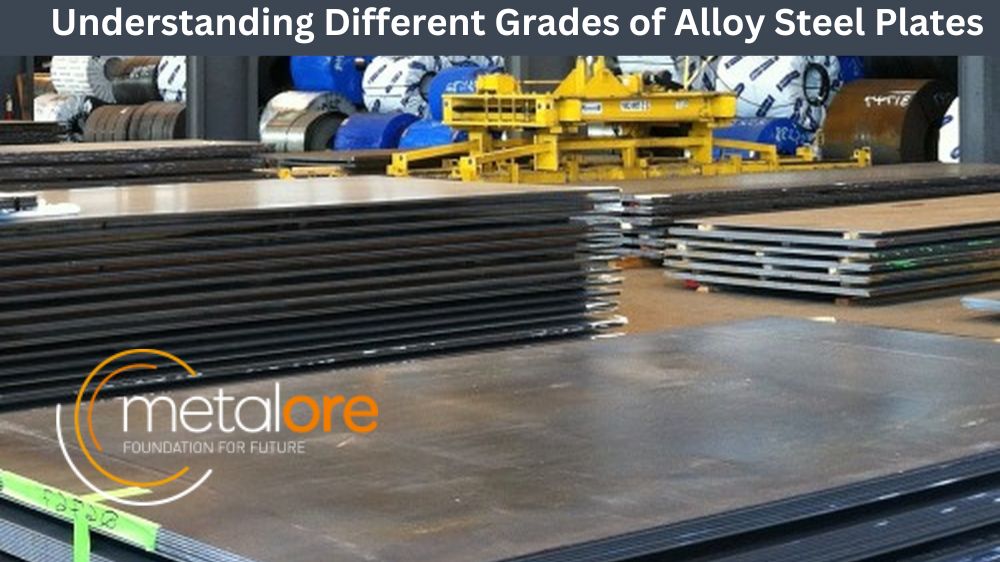
Steel shapes nearly every major industry, including construction, automotive, power generation, and heavy fabrication. Among the available options, Alloy Steel Plates stand out for combining strength with adaptability across demanding conditions. Choosing the right grade requires understanding what each one actually delivers.
What are Alloy Steel Plates?
Alloy steel plates are steel plates manufactured by alloying iron with one or more elements such as carbon, manganese, chromium, nickel, molybdenum or silicon depending on the desired properties. The addition of these elements results in a mechanical performance much better than plain carbon steel. Tensile strength figures run three to four times higher, and corrosion resistance improves considerably in grades designed for wet or chemically aggressive environments.
Different Types of Alloy Steel Plate Grades
Low Alloy Steel Plates
Low alloy steel plates carry between 1 and 5% total alloying content, drawing on silicon, manganese, nickel, and chromium to build their property profile. At that composition, the plates deliver solid strength and toughness without sacrificing weldability, a combination that keeps fabrication costs manageable. Structural work dominates their application list: bridges, multi-storey frames, and pressure vessels all rely on this grade.
Medium Alloy Steel Plates
Raise the alloying content to between 5 and 10%, using chromium, molybdenum, and nickel, and the plates cross into territory suited for far harsher service. Medium alloy plates handle elevated stress, resist abrasion, and hold up against corrosion in conditions that would degrade lower grades quickly. Aerospace components, oil and gas equipment, and power generation hardware regularly specify this range.
High Alloy Steel Plates
High alloy plates contain between 10 and 60% alloying elements, often including tungsten and vanadium alongside chromium and molybdenum. That composition produces hardness and high-temperature performance that standard grades cannot approach. Cutting tools, industrial turbines, and structural aircraft parts fall into this category, where failure under load or heat is not an acceptable outcome.
Ultra-high Alloy Steel Plates
Above 60% alloying content, plates enter ultra-high territory. Tungsten, cobalt, and nickel feature heavily at this level, producing wear resistance and strength margins required by aerospace propulsion and defence applications. Rocket nozzles, missile housings, and jet engine components operate at extreme thermal and mechanical loads that only this grade sustains.
Nickel Alloy Steel Plates
Nickel alloy steel plates carry between 10 and 30% nickel as the primary alloying addition. Nickel at these proportions strengthens the steel, raises toughness at low temperatures, and extends corrosion resistance into chemically aggressive environments. Chemical processing equipment, nuclear reactor components, and heat exchangers account for a large share of demand.
Conclusion
Each grade of alloy steel plate serves a specific performance band, and matching the plate to the application protects both structural integrity and project budget. Contact MetalOre Industries to confirm the right grade for your operating conditions before placing an order.