
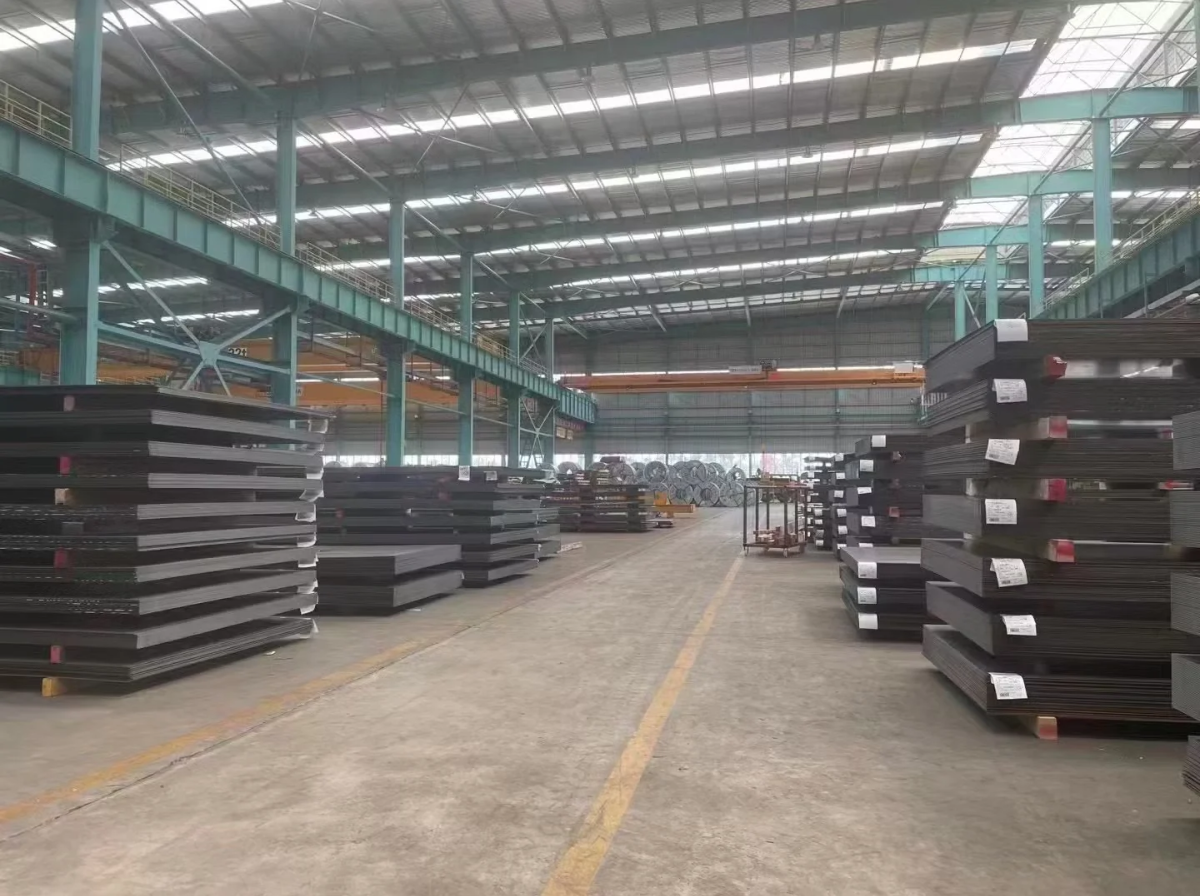
600 BHN plates sit at the higher end of abrasion-resistant steel. Because they are through-hardened rather than surface-treated, their wear resistance remains strong even after cutting or reshaping. For chutes, liners, and crusher parts, it is important to confirm the 600 BHN plate specifications and hardness range before ordering, since any mismatch in hardness or thickness can quickly lead to premature wear or cracking during fabrication.
What Is a 600 BHN Plate?
BHN stands for Brinell Hardness Number, which is determined by pressing a hardened ball into the steel and measuring the diameter of the resulting indentation. A plate rated at 600 BHN sits near the top of commercially available abrasion-resistant grades, above standard AR400 or AR500 material. This hardness level is chosen when sliding or impact abrasion comes from sharp, hard particles such as ore, rock, or scrap metal, whereas a softer plate wears through fast.
600 BHN Plate Specifications
A spec sheet covers steel grade, hardness range, thickness, plate size, surface finish, and the standard it’s certified against. Chemical composition generally includes carbon, manganese, chromium, and boron for through-hardening without excessive brittleness. Plates ship as certified 600 abrasion-resistant steel, backed by mill test certificates showing the actual hardness result, not just the target.
| Parameter | Typical Value |
| Hardness (surface) | 570–640 BHN |
| Steel type | Low alloy, quench-boron-treated |
| Common thickness | 6mm to 50mm |
| Certification | EN 10204 3.1 mill test certificate |
600 BHN Plate Hardness Range
Most 600 BHN plates test between 570 and 640 BHN at the surface, softening slightly toward the core on thicker sections. This is normal. The permissible band shifts by standard or mill spec, so two plates labelled “600 BHN” from different sources can still show a 30- to 40-point spread on the test certificate. Consistency across the sheet matters more than hitting an exact number, since a plate with hardness swings of 50+ BHN wears unevenly and fails at the softer patches first.
600 BHN Plate Thickness and Size
Thickness on 600 BHN stock generally ranges from 6 mm up to 50 mm, with some mills rolling heavier sections on request. A thinner plate, 6mm to 12mm, suits chute liners or truck bed lining where weight matters. Heavier sections, 20mm and up, go into crusher jaw backing plates and impact zones where abrasion and blunt impact load the material together. Custom sizes outside the standard range are available from most suppliers, though lead times run longer.
Standards and Testing Requirements for 600 BHN Plates
Hardness is tested using ASTM E10 or ISO 6506, which specify the ball diameter, load, and dwell time for a valid Brinell reading. In addition to hardness, a proper mill certificate includes chemical composition, yield and tensile strength, dimensional tolerances, and impact toughness if the application requires it. Before ordering, check which standard the supplier certifies against and confirm the test method matches your engineering spec. A plate that meets hardness but skips chemistry disclosure is not a complete spec.
600 BHN Plate Applications
600 BHN plates are widely used in industries that handle abrasive materials and require high wear resistance. Their hardness, durability, and ability to withstand demanding operating conditions make them suitable for mining, construction, recycling, and heavy material handling. Understanding the advantages of 600 BHN plates helps engineers and procurement teams select the right material for applications involving continuous abrasion and heavy-duty wear.
Mining Equipment
Ore chutes, hopper linings, and dump truck beds take constant abrasion from rock and ore fines, and 600 BHN plate extends service intervals.
Crushers and Screening Equipment
Jaw plates, cone liners, and screen decks see impact and sliding wear together, where the hardness and toughness combination matters.
Heavy-Duty Material Handling
Bucket lips, conveyor skirts, and loader wear plates are designed to withstand repeated scraping and loading cycles.
Construction Machinery
Excavator buckets and dozer blades grind through soil, gravel, and demolition debris on a daily basis.
Recycling Equipment
Shredder liners and separator components face metal-on-metal contact plus grit, which accelerates wear on lower-grade steel.
Wear Liners
General-purpose liner plates for bins, hoppers, and transfer points are designed to extend the life of equipment in high-throughput operations.
How to Select the Right 600 BHN Plate?
Begin by determining the required hardness range and ensuring it aligns with the mill certificate, rather than relying solely on the product name. It is essential to match the thickness to the load and impact conditions that the component will encounter, as underspecifying can result in premature failure. Verify dimensions and tolerances against the fabrication drawing. Confirm the applicable standard, check that testing documents are included, and plan for preheat on welding or edge preparation on cutting, since 600 BHN steel behaves differently under a torch or saw than mild steel does.
Conclusion
Choosing a 600 BHN plate comes down to matching hardness, thickness, and certification to the actual wear conditions on site, not picking the highest number available. Over-specifying adds cost without extending service life; under-specifying wears out early. Talk to a reliable supplier before finalising the order to confirm the correct specification for the application.