
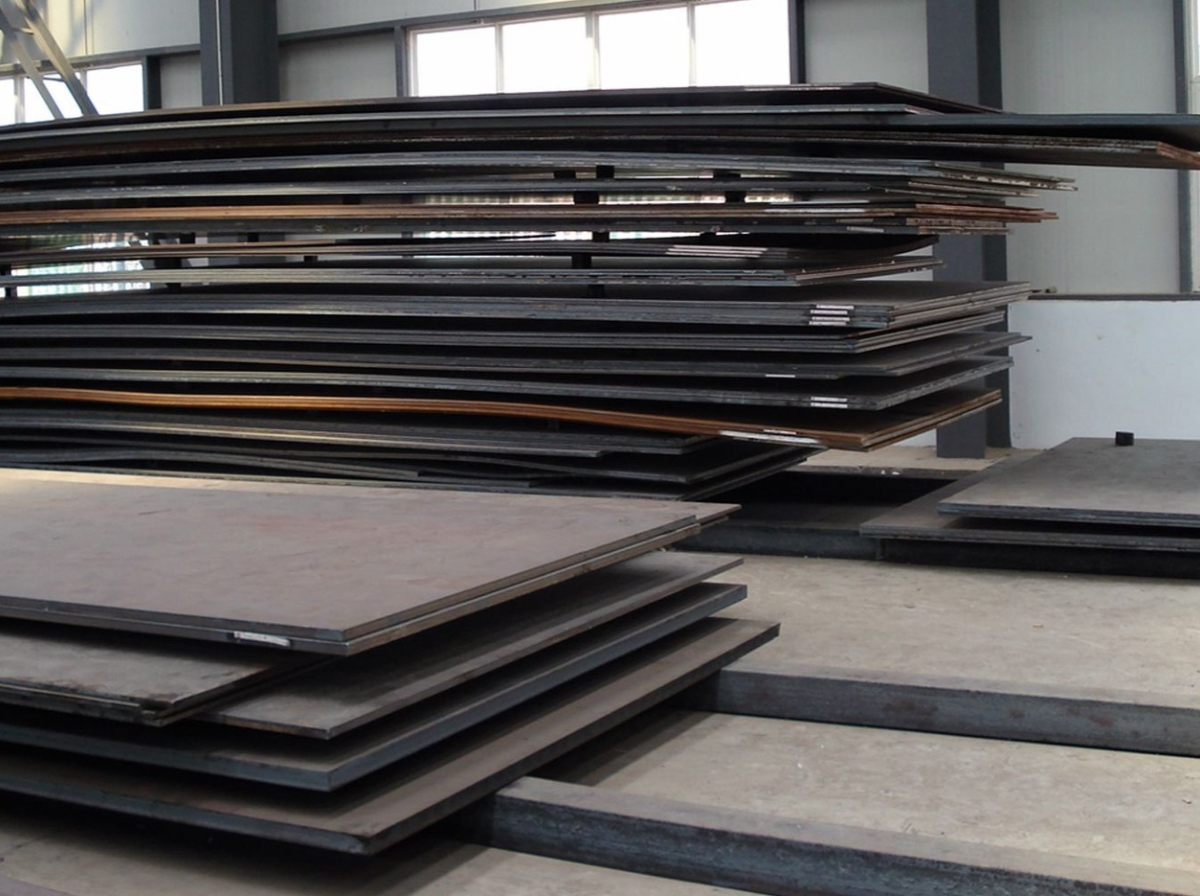
Alloy steel and carbon steel plates both show up constantly across structural and industrial work, and at a glance, they can look like interchangeable options. They aren’t. The alloy steel plate vs carbon steel plate decision comes down to real differences in composition, strength, hardness, toughness, and overall performance, and picking the wrong one for a given application can mean paying for properties you don’t need or, worse, underspecifying a component that later fails under load or heat it wasn’t built to handle.
What Is an Alloy Steel Plate?
Alloy steel plate starts as carbon steel with deliberate additions of elements like chromium, nickel, molybdenum, and manganese, each added to push a specific property further than plain carbon steel can reach on its own. Chromium boosts hardness and corrosion resistance, nickel adds toughness; molybdenum improves strength at elevated temperatures; and manganese supports overall strength and wear resistance. Combined in the right proportions, these elements let alloy steel plate outperform standard carbon steel in demanding conditions, though that performance comes at a higher material cost.
What Is a Carbon Steel Plate?
Carbon steel plate is a flat, durable iron alloy containing carbon, used primarily for structural manufacturing. The qualities of carbon steel are more due to the amount of carbon, not a wide recipe of alloying elements. Low carbon steel is still soft, highly weldable, and good for general fabrication where formability is more important than raw strength. Medium-carbon steel is stronger and harder, but still adequately weldable. High-carbon steel is even harder and wear-resistant, but this comes at the expense of weldability and ductility. That range gives carbon steel plate real flexibility even without the alloying constituents that make alloy steel.
Alloy Steel Plate vs Carbon Steel Plate: Key Differences
| Property | Alloy Steel Plate | Carbon Steel Plate |
| Chemical Composition | Carbon steel plus chromium, nickel, molybdenum, manganese | Primarily iron and carbon |
| Strength | Generally higher, especially at elevated temperature | Moderate, varies by carbon content |
| Hardness | Higher, tunable through alloying and heat treatment | Lower, though high-carbon grades harden well |
| Toughness | Generally better, particularly with nickel additions | Can be lower, especially in high-carbon grades |
| Wear Resistance | Higher due to alloying elements | Moderate, improves with carbon content |
| Corrosion/Oxidation Resistance | Better, depending on alloy content | Lower, often needs protective coating |
| Heat Resistance | Stronger performance at elevated temperature | Limited at high temperature |
| Weldability | Can be more demanding, depends on alloy content | Generally good, especially at lower carbon levels |
| Machinability | Can be tougher to machine depending on hardness | Generally easier to machine |
| Cost | Higher due to alloying elements | Lower, more budget-friendly |
The differences that matter most in practice come down to temperature and load. Alloy steel plate earns its higher cost specifically in applications facing sustained heat, heavy mechanical stress, or corrosive exposure, where its alloying elements deliver a real performance advantage. Carbon steel plate remains the more economical choice wherever those extreme conditions aren’t in play, and its better weldability often makes fabrication simpler too.
Alloy Steel Plate vs Carbon Steel Plate: Applications
Alloy Steel Plate:
- Pressure vessels and boilers
- Heavy machinery
- Automotive components
- Power generation equipment
- Oil and gas equipment
Carbon Steel Plate:
- Structural frameworks
- Construction equipment
- Storage tanks
- General fabrication
- Machinery and industrial components
Which Plate Should You Choose?
Selection should start with the required strength and hardness for the application, then move to operating temperature, since that’s where alloy steel’s advantage becomes most pronounced. Wear and load conditions are next. This is particularly important for components subjected to constant mechanical stress. In more severe environments, environmental exposure and corrosion often drive the decision to use alloy steel. Welding and fabrication needs can drive the decision to use carbon steel when simple, cost-effective joining is more important. Budget and estimated service life are the great equalisers here, with the greater initial cost of alloy steel needing to be balanced against the performance and longevity it offers over the life of the component.
Conclusion
Alloy steel and carbon steel plates vary widely in composition, strength, hardness, and response to heat, load and corrosive conditions. No single material is always the best choice; the correct material is entirely dependent on the application’s needs, from operational circumstances to financial limits. Make sure you check with a reputable source for the correct grade and specification for your project before you order.