
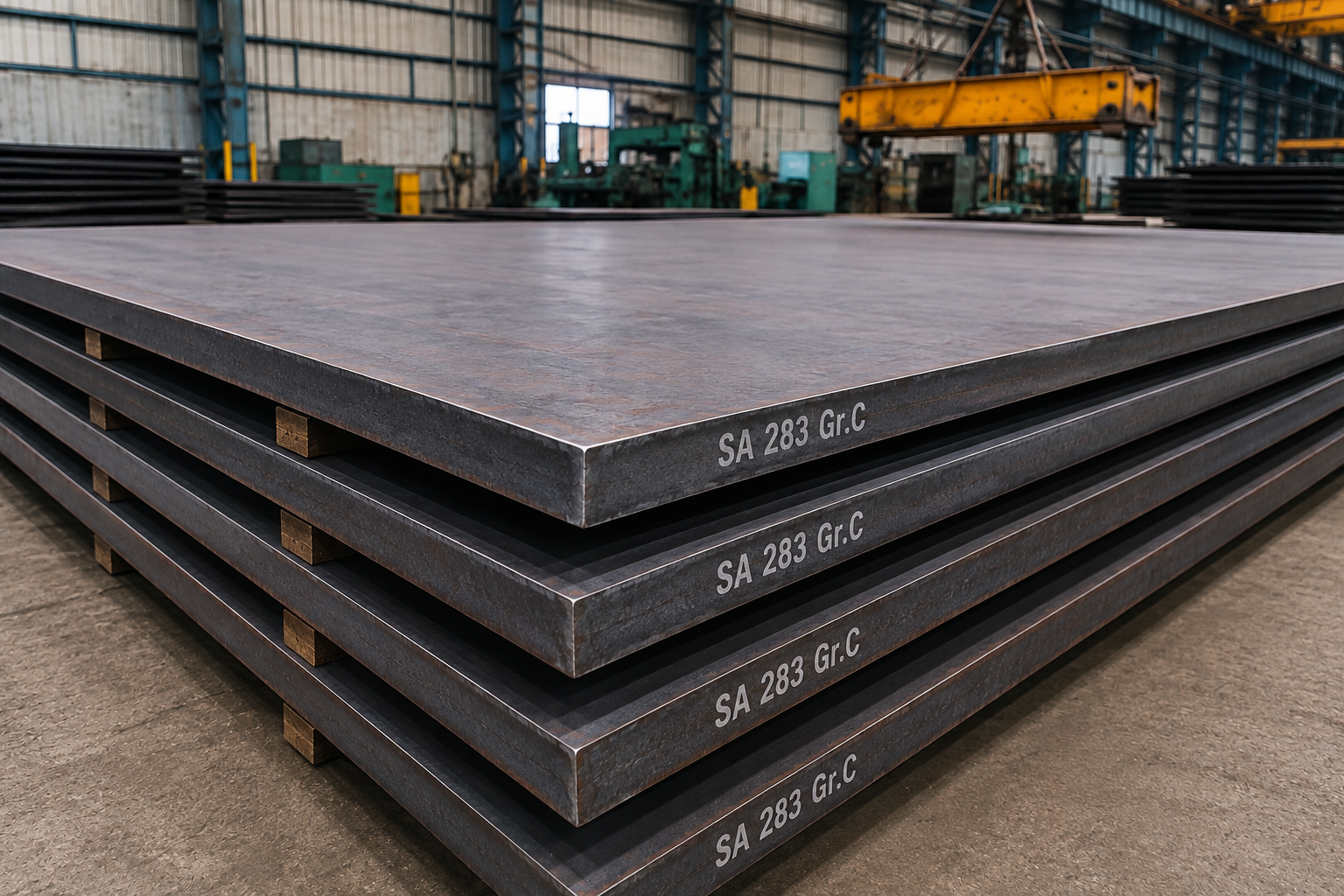
SA 283 Gr.C Plates and SA 285 Gr.C Plates rank among the most specified carbon steel plates in industrial fabrication, yet their similar chemistry masks distinct design intents. One grade targets general structural work; the other targets pressure-retaining equipment. Confusing the two during procurement can compromise weld integrity, code compliance, and long-term service life. This blog breaks down the mechanical differences, application boundaries, and selection criteria that separate these grades, so fabricators and buyers can specify with confidence.
What Are SA 283 Gr.C Plates and SA 285 Gr.C Plates?
SA 283 Gr.C Plates are governed by ASME SA283. They are made for general structural and fabrication work where moderate strength and ease of shaping are more important than pressure. SA 285 Gr.C Plates are governed by ASME SA285. They are specified for fusion-welded pressure vessels and boilers operating at low to moderate pressures. The two grades have overlapping carbon content, which is why engineers compare them with each other during material selection. SA 283 Gr.C supports frames, tanks, and load-bearing structures. SA 285 Gr.C, by contrast, handles internal pressure and thermal cycling inside vessel walls. The SA 283 Gr.C plate specification sheet lists standard stock sizes suited to structural fabrication work.
SA 283 Gr.C Plates vs SA 285 Gr.C Plates: Key Differences
SA 283 Gr.C Plates and SA 285 Gr.C Plates diverge sharply in application, mechanical performance and fabrication requirements, despite sharing a similar carbon steel base and price point.
| Feature | SA 283 Gr.C Plates | SA 285 Gr.C Plates |
| Primary Use | Structural & general fabrication | Pressure vessels & boilers |
| Standard | ASME SA283 | ASME SA285 |
| Strength | Moderate tensile strength | Moderate strength with pressure vessel suitability |
| Weldability | Good | Excellent |
| Best Applications | Storage tanks, structural components | Pressure vessels, boilers, heat exchangers |
Key Properties of SA 283 Gr.C Plates
SA 283 Gr.C Plates are a good mixture of strength and workability. This makes it a practical choice for general fabrication and moderate-duty structural applications.
- SA 283 Gr.C Plates are moderately strong and used for general structural applications where premium alloy grades are not required.
- The plates weld easily using standard shielded metal arc and submerged arc processes common in fabrication shops.
- Good formability allows fabricators to bend, roll and shape the plates without cracking during cold working.
- Fabrication stays straightforward since the material cuts, drills and machines cleanly with standard workshop equipment.
- Structural performance remains consistent across load-bearing frames, supports and general engineering assemblies over long service periods.
- Lower material cost compared to alloy or pressure vessel grades makes this plate practical for general engineering budgets.
Where Are SA 283 Gr.C Plates Commonly Used?
In many industrial uses where moderate strength, good fabrication and cost effectiveness are more important than pressure containment, SA 283 Gr.C Plates are used.
Structural Fabrication
SA 283 Gr.C Plates are used for framing, bracketing and supporting fabrication of industrial structures. The plate’s moderate strength and good weldability permit shops to fabricate load-bearing assemblies without the need for special welding procedures or preheat treatments.
Storage Tanks
Atmospheric and low-pressure storage tanks rely on this grade for tank shells, roofs and support structures. Its formability suits rolled cylindrical sections, while its strength handles the static loads typical of bulk liquid storage.
Industrial Equipment
Equipment manufacturers specify SA 283 Gr.C Plates for machine bases, enclosures and structural components where moderate strength meets easy fabrication. The material machines and welds without special handling, cutting production time on repeat industrial builds.
General Engineering Projects
Contractors across sectors turn to this grade for its fabrication flexibility on projects that fall short of pressure vessel requirements. It suits platforms, walkways, chutes and fabricated assemblies across construction and manufacturing sites alike.
How to Choose Between SA 283 Gr.C and SA 285 Gr.C Plates
Selecting between these grades starts with the application: structural work points to SA 283 Gr.C, while pressure-retaining equipment points to SA 285 Gr.C. Operating pressure and service temperature narrow the decision further, since SA 285 Gr.C carries fusion-welded pressure vessel qualification that SA 283 Gr.C does not. Pressure vessel grades demand stricter weld procedures and radiographic inspection under ASME Section VIII; hence, Fabrication complexity, the applicable ASME code section and project budget all must be considered. Consulting a stockist like MetalOre helps match the grade to project specifications before procurement begins.
Conclusion
Both SA 283 Gr.C Plates and SA 285 Gr.C Plates are based on carbon steel, but are used for different purposes. One is used for structural fabrication, the other for pressure-retaining equipment. Matching grade to operating pressure, temperature and code requirements ensures safety and service life. For specifications and sizes available, browse the full SA 283 Gr.C plate range.