
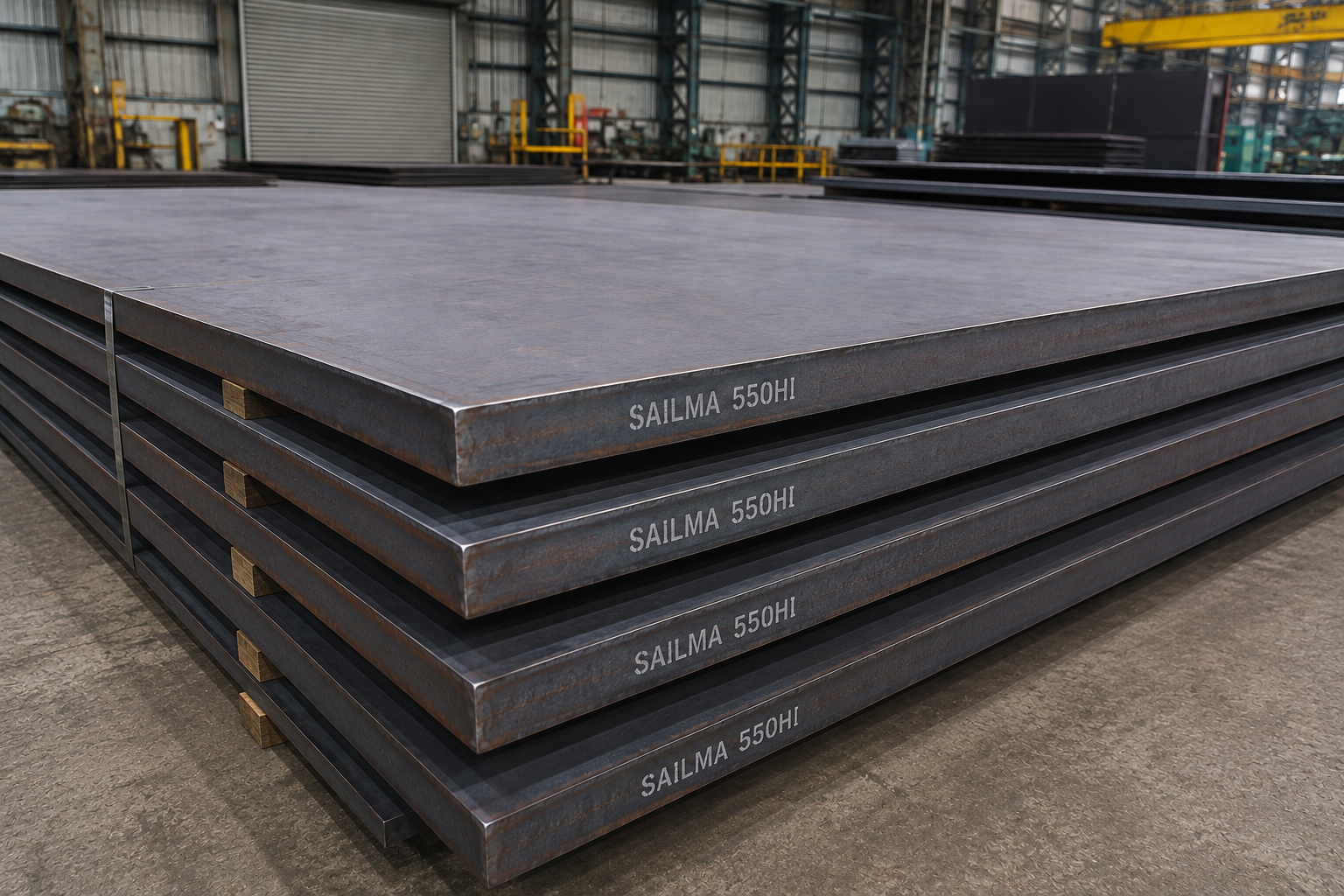
SAILMA 550HI Plates have a minimum yield strength of 550 MPa. They are used in cranes, dumper bodies and structural frames, mostly because they cut weight without compromising load capacity. Unnoticed defects in high-strength plates can lead to costly repairs if they are not identified early. Inspection and testing check the mechanical properties, chemical composition, and surface condition before the plate leaves the mill. This piece goes through the inspection methods, testing steps and quality standards that separate a certified SAILMA 550HI Plate from one that is poorly checked.
What Are SAILMA 550HI Plates?
SAILMA 550HI Plates are high-strength low alloy (HSLA) structural steel plates, built to a minimum yield strength of 550 MPa. The strength comes from controlled rolling and alloying with manganese and niobium, not from adding thickness. That keeps sections lighter while still handling higher loads. These plates hold up well at low temperatures and can be easily welded, which is why they turn up in earthmoving equipment, mining machinery, and structural members that carry actual load. Because the strength depends on tight control during production, small mistakes in the mill matter more here than with mild steel. This is why rigorous plate-level inspection is essential for this grade.
Why Inspection and Testing Are Important for SAILMA 550HI Plates
Testing verifies that each plate actually meets the values in the project spec, not just the numbers on a general mill brochure. Problems like lamination, inclusions or thickness variation are not always visible on the surface. Early detection during inspection requires minimal time, while rectifying defects post-welding incurs substantial financial costs and structural rework. Documented test records eliminate guesswork during installation and cut downstream maintenance frequency by up to 30%. Certified inspection logs convert assumptions into verifiable operational data.
Key Inspection and Testing Methods for SAILMA 550HI Plates
Catching every flaw before fabrication requires a four-part evaluation strategy: visual checks, mechanical testing, chemical composition analysis, and non-destructive examination. No single test covers every failure point on its own.
Visual & Dimensional Inspection
Inspectors check each plate for surface defects, scale, pitting and rough edges that could affect fabrication. Thickness, width, and length are measured against the order size, checked plate by plate before acceptance.
Mechanical Testing
Tensile testing confirms the plate reaches its rated strength. Yield strength testing checks the 550 MPa minimum specific to this grade. Impact toughness, usually Charpy V-notch, and hardness testing are done on client request.
Chemical Analysis
Spectrographic analysis confirms carbon, manganese and micro-alloying content match the SAILMA 550HI specification. This also checks that batches stay consistent, since small shifts in composition change weldability and strength.
Non-Destructive Testing (NDT)
Ultrasonic Testing (UT) picks up internal flaws like laminations without damaging the plate. Radiographic Testing (RT) is used when the project specifies it. Both catch defects that visual inspection alone will not be able to notice.
Quality Standards and Certifications Buyers Should Verify
Documentation is what turns a tested plate into a verifiable one. Buyers should ask for the following before accepting delivery.
- Compliance with SAIL/IS specifications, confirming the plate meets the chemical and mechanical parameters of the SAILMA 550HI grade.
- EN 10204 3.1 Material Test Certificate, validated by an inspection representative independent of production.
- Mill Test Certificate (MTC), listing the heat number, composition, and mechanical results for that batch.
- Third-party inspection, arranged when the project specification calls for independent verification.
- Traceability documentation, linking each plate back to its heat number and production batch.
Proper documentation such as inspection certificates and material traceability is how plate quality actually gets verified on industrial projects, not just assumed.
How to Choose High-Quality SAILMA 550HI Plates
Ask for the inspection report and MTC for the actual batch you are buying, not a generic certificate for the grade. Verify test values directly against the SAILMA 550HI specification to ensure full material compliance. Traceability should link every plate to its heat number, with test reports that are recent, not years old. Suppliers who run NDT and chemical testing at the mill stage are less likely to pass on substandard material. Metal Ore supplies certified SAILMA 550HI plates with full test documentation for structural and heavy engineering work.
Conclusion
Rigorous inspection and testing ensure a steel plate performs reliably in practical applications, not merely on technical datasheets. Certified test reports, traceability and compliance with SAILMA 550HI specifications give buyers something to check their purchase against, rather than just trusting the supplier. MetalOre has imported and supplied certified steel products since 1994. Review MetalOre’s SAILMA 550HI Plates for complete technical specifications and project ordering details.